Queue watcher Overview

Project: Reducing Uncertainty in Spontaneous Dining Decisions

People often decide where to eat spontaneously, especially when exploring a neighbourhood, meeting friends, or looking for a quick snack or coffee.These decisions often involve walk-in restaurants, cafés, bakeries, and grab-and-go spots, where availability and queue length are unknown until arrival.

  1. 🧢 Role

    Designer

  2. 🙌 Collaborator

    -

  3. 🗓️ Date

    2026

Problem

People making spontaneous food decisions cannot reliably tell how busy a place is before arriving.

Impact

As a result:
people waste time travelling to crowded venues
they encounter unexpected queues
some abandon the venue and search elsewhere

For businesses, this can also mean lost customers and uneven demand.

Opportunity

Provide real-time signals about busyness and wait times so people can decide where to go before arriving.

How might we...?

How might we help people understand how busy a place is before they arrive so they can make better spontaneous dining decisions?
Concept Exploration

To address this problem, I explored several solution approaches that vary in data source, reliability, and complexity.

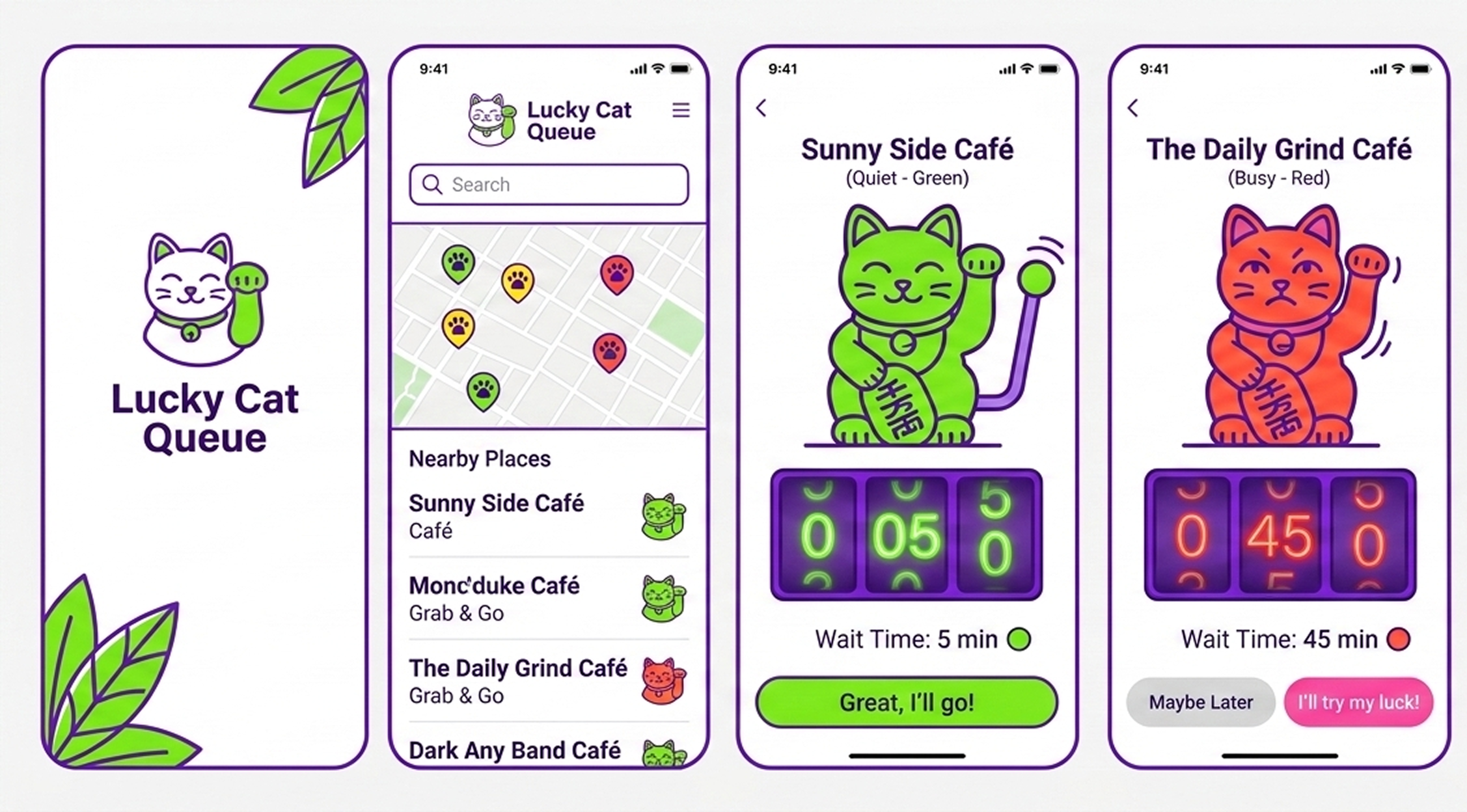
1. Lucky cat - queue

A playful, interactive way for users to get a quick estimate of wait times at grab-and-go spots or cafés. Combines gamification with visual cues to make decision-making more engaging.

How it works
User searches for a place in the app.
• A fortune cat appears with a slot machine-style number display underneath.
• The arm of the fortune cat will be pulled automatically. The number displayed indicates the estimated wait time.
• The fortune cat changes color to reflect busyness, like a heat map:
🟢 Quiet
🟡 Moderate
🔴 Busy

Figure 1: Lucky Cat Queue key screens AI generated image

2. Queue Monster (AR Game)

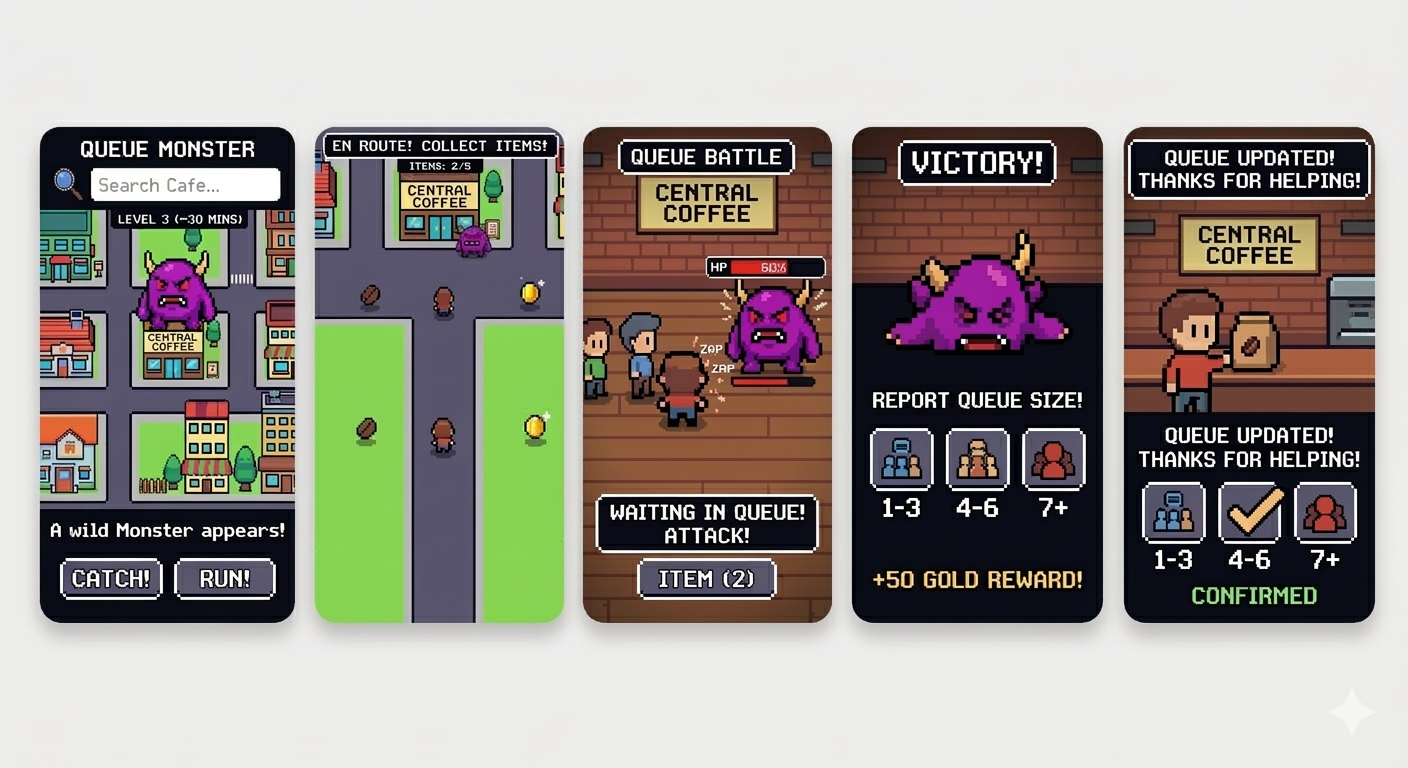
A playful, immersive way to pass time while waiting and collect real-time data about queues at busy grab-and-go spots or cafés. Users interact with a virtual “Queue Monster” that represents the current wait time.

How it works
1. User searches for the name of the place.
2. A Queue Monster appears, with levels corresponding to estimated wait times:
• Level 1: ~5 minutes
• Level 2: ~15 minutes
• Level 3: ~30 minutes
3.Users decide: Catch the monster? → head toward the location
4. While en route:
Collect items and power-ups
Engage in mini-game actions tied to reaching the place
5. While waiting in the queue:
Assemble collected items
Try to defeat the Queue Monster
6.After the monster is “defeated”:
Prompt users to report the number of people ahead to improve real-time queue data.

Figure 2: Queue Monster key screens AI generated image

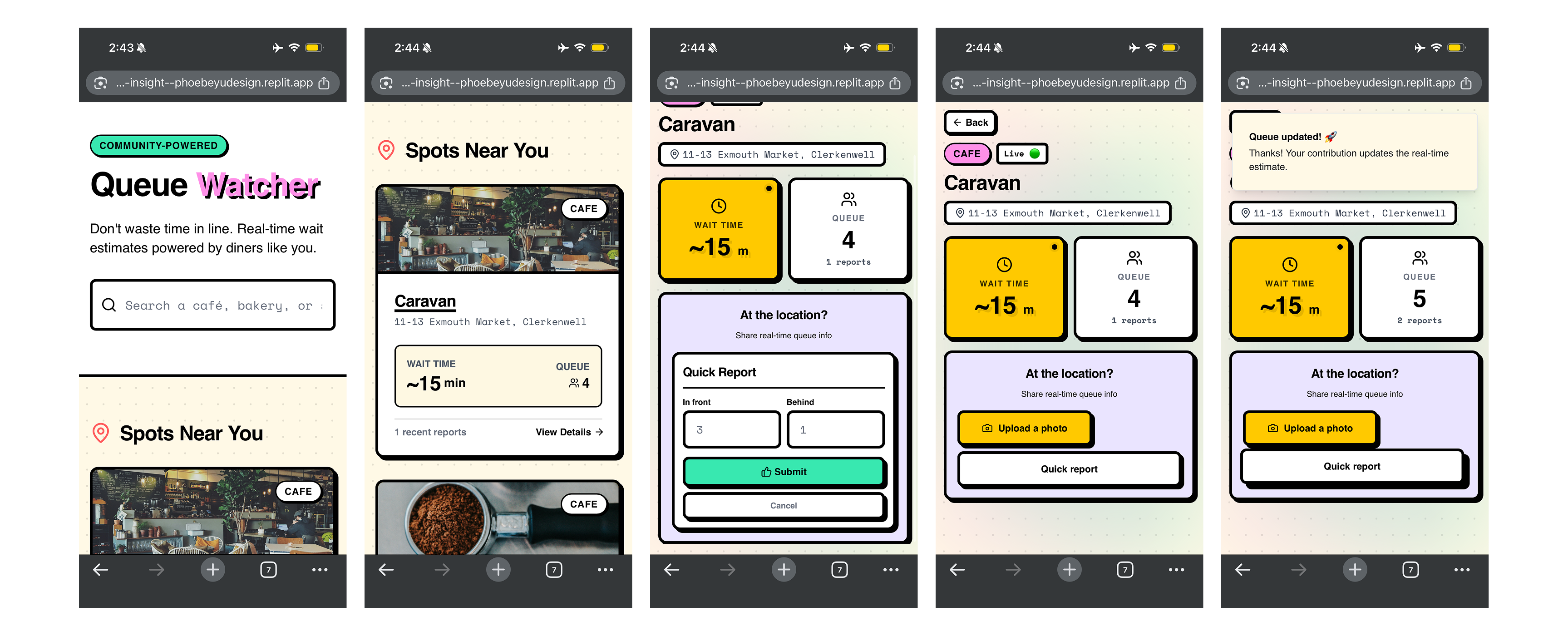
3. Queue Watcher App

Community-Powered Queue. A crowd-sourced system where diners report current queue conditions.

How it works
1. Search for a place:  User enters the name of a café, bakery, or grab-and-go spot.
2. See estimated wait time. The app shows a current estimated wait, e.g., “~15 minutes.”
3. Option to contribute real-time dataAre you at the location?
Yes → Quick input form:“How many groups are in front of you?”“How many people are behind you?”  Submit → “Thanks! Your contribution updates the real-time estimate.”
No → Option to be reminded:“Let us know when you arrive if you want to contribute to real-time updates.”
4. Aggregated results updateThe system recalculates the estimated wait and queue length based on all user contributions.

Replit prototype link

Figure 3: Queue Watcher key screens AI generated image

What I learned

👉 AI tools like Replit make it surprisingly fast to turn small ideas into working prototypes. What used to take days can now happen in a single afternoon.
👉 Everyday frustrations are great prompts for experimentation — small pain points can quickly become mini product ideas worth exploring.